
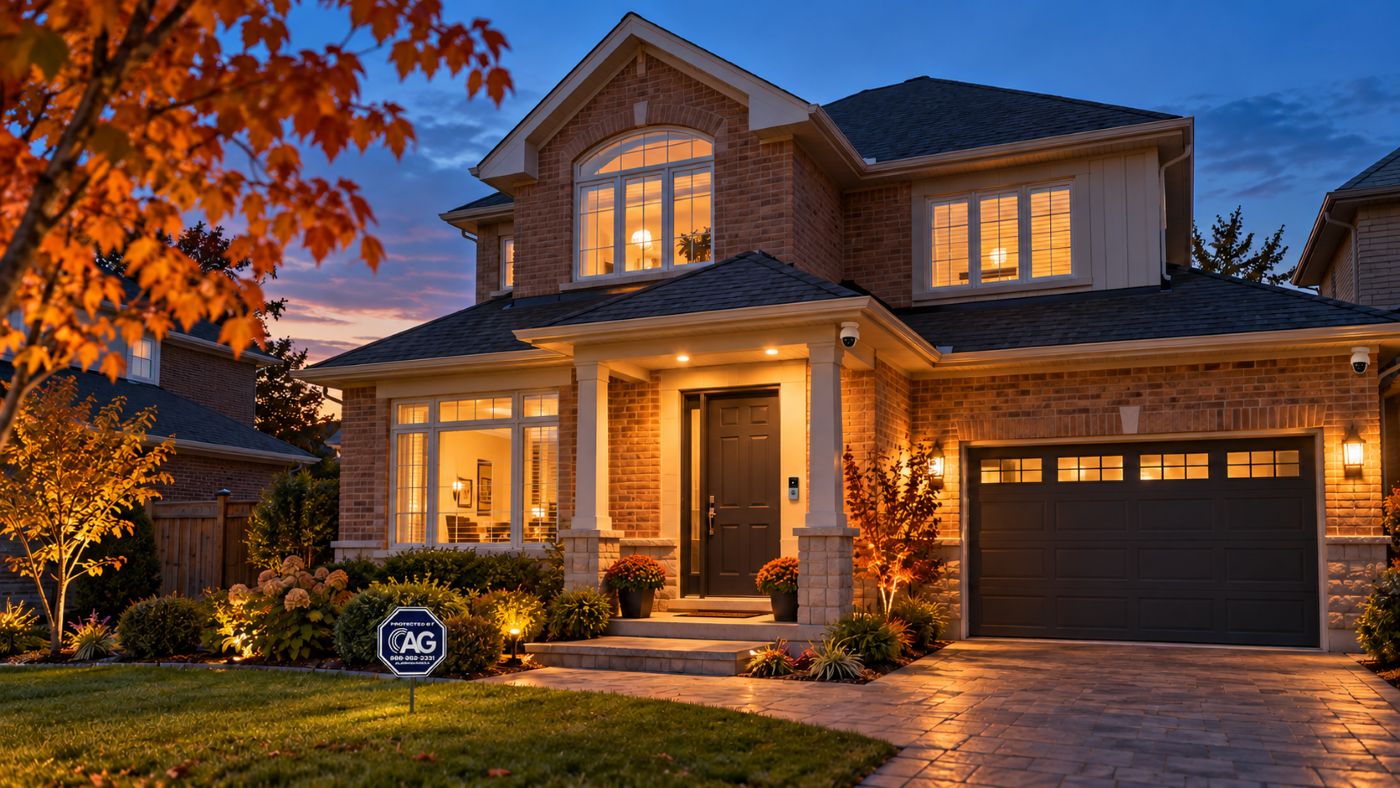
How to Protect Your Home from Invasion
Your home should be a place where you can relax and feel secure. If you are concerned about someone forcing their way inside, knowing where to start can make the task of improving security feel more manageable.
The most useful approach combines secure entry points, good visibility, reliable detection and a plan for getting help. No security measure can guarantee that a home invasion will never happen, but these steps can help you address vulnerabilities and prepare your household.
For Ontario homeowners, protecting a home also means thinking about security while people are inside—not only when everyone leaves for work or a holiday.
Start with doors and windows
Walk around your property and look at every accessible entrance. Include the side door, basement windows, patio doors and the door connecting your garage to your home.
A strong lock needs a sound door and frame around it. Look for loose hardware, damaged frames and locks that no longer latch properly. Have a qualified professional assess weaknesses and recommend suitable reinforcement. Patio doors and accessible windows also deserve attention, even when they are out of view from the street.
Keep entry points locked while you are home, including when you are spending time in the backyard. Any additional security hardware should allow household members to exit quickly in an emergency.
Make entrances easier to see
Look at your home after dark. Can you clearly see someone approaching the front door? Are side entrances or backyard access points hidden in shadow?
Maintain exterior lighting and consider motion-activated lights where appropriate. Trim landscaping that obscures doors and windows. These changes can improve visibility for you and your neighbours while reducing places where someone could approach unseen.
York Regional Police recommends measures such as secure locks, lighting, cameras and clear sightlines as part of home protection. Physical improvements and everyday habits work best together.
Use your alarm while you are home
Many homeowners arm their alarm when they leave but switch it off as soon as they return. Review whether your system has a Stay or Home mode that suits your household.
Depending on the equipment and programming, this mode can keep selected perimeter sensors active while allowing movement inside. Door and window contacts can detect an opening, while suitable glass-break sensors can provide additional coverage in areas with vulnerable glass.
Ask your security provider which sensors remain active, which entry points have a delay and how the system should be armed overnight. Do not assume every door or window is protected simply because there is a keypad on the wall. The configuration needs to match your layout, pets and family routines.
Give cameras a clear purpose
Security cameras can help you see who is approaching, review activity and preserve recordings. A video doorbell may also let you speak with a visitor without opening the door.
Placement matters. Review what each camera can actually see in daylight and after dark. Consider lighting, obstructions, recording settings and whether faces are visible at the distances that matter. Check that recordings can be retrieved when needed.
A camera notification is different from a monitored alarm signal. Unless you have a specific service that includes active video monitoring, do not assume someone is watching your cameras or responding to every alert. Ask your provider to explain exactly what is included.
Understand how monitoring works
A professionally monitored alarm can send supported alarm signals to a monitoring centre, where operators follow the response procedures established for the account.
Before choosing a service, ask what happens after an intrusion signal, how verification works and when emergency services may be contacted. Confirm whether the system has backup power and cellular communication, how long those features are designed to operate and which functions depend on your internet connection.
If you are considering a panic button or duress feature, have your provider explain its purpose and operation. Arrange any demonstration or test with them first. Monitoring does not guarantee
immediate police attendance, and response depends on the circumstances and local procedures.
Be cautious with unexpected visitors
You do not need to open your door to speak with someone. Use a doorbell camera, intercom or the closed door to ask who they are and why they are visiting.
If a person claims to represent a company or utility, verify their identity through a contact number you find independently before allowing entry. Discuss the same routine with everyone in your household, including children and anyone who may feel pressured by an unexpected visitor.
Make security part of your daily routine
A useful routine should be simple enough to follow consistently. Before bed, check doors and accessible windows, close the garage and arm the appropriate alarm mode. Keep your phone accessible and make sure everyone who needs to operate the system knows how.
Protect the digital side of your security system too. Use unique passwords, enable multifactor authentication where available and review who has app access. Remove access that is no longer needed and keep equipment software updated according to the manufacturer’s instructions.
Report suspicious activity through the appropriate police channel. If someone is trying to force entry or there is an immediate threat, call 911.
Have a plan for an emergency
Talk with your household about how to get help and move to safety if someone attempts to enter. Consider the needs of children, older adults and anyone with limited mobility.
Avoid confronting an intruder or going outside to investigate a possible break-in. If you can leave safely, do so. If leaving would expose you to danger, seek a secure location, call 911 as soon as it is safe and follow the dispatcher’s instructions. Personal safety comes before protecting possessions.
Find the gaps in your home security
An existing alarm or a few cameras may provide useful protection, but it is worth checking whether the coverage still suits your home. Renovations, new entry points, changing routines and older equipment can all be reasons to review the setup.
Start with a few questions: Are your accessible entrances covered? Can you arm the system comfortably while at home? Do you understand what happens when it activates? Can everyone in your household use it confidently?
If you are unsure of the answers, a security assessment is a practical next step.
Request a Home Security Assessment from Alarm Guard
You do not need to choose equipment before speaking with a security professional. Start with your concerns, your home’s layout and how your family uses the space.
Contact Alarm Guard Security to request a home security assessment and discuss options for intrusion detection, cameras and professional monitoring. Whether you are considering a new system or reviewing an existing one, the goal is to identify gaps and help you choose protection that fits your household.
Take the next step toward a more secure home. Request your home security assessment with Alarm Guard Security by calling 1 866 282 3331
Get expert advice and a clear plan to protect your home from a company with over 23 years of experience helping keep families safe.